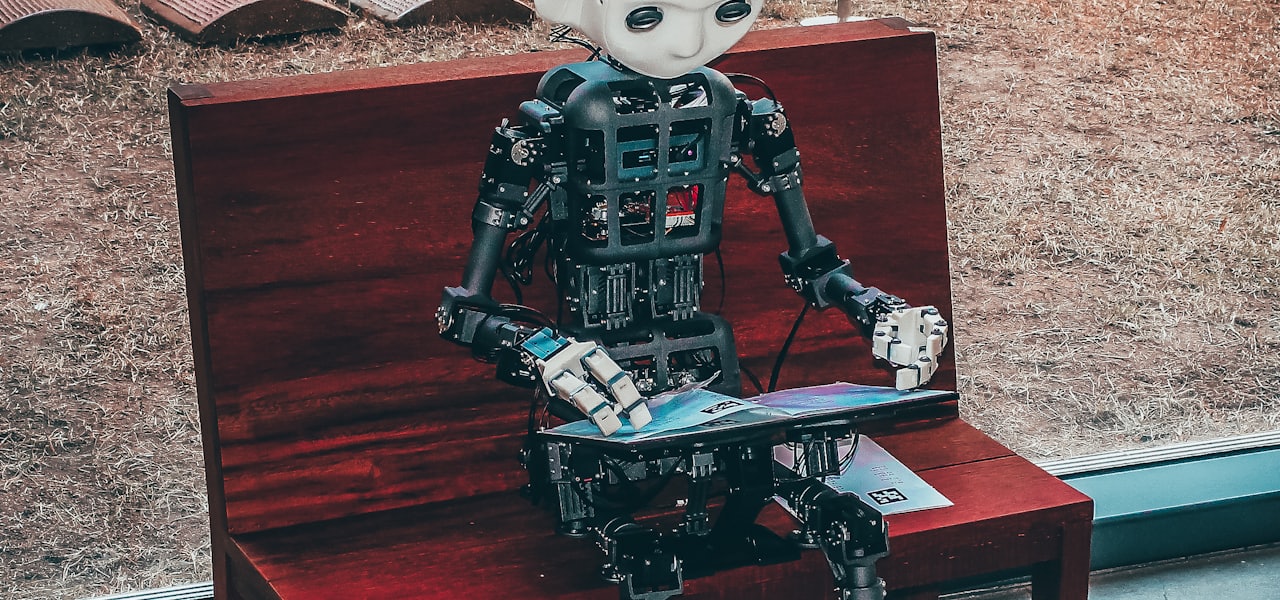
Artificial wisdom (AW) is an artificial intelligence (AI) system which is able to display the human traits of wisdom and morals while being able to contemplate its own “endpoint”. Artificial wisdom can be described as artificial intelligence reaching the top-level of decision-making when confronted with the most complex challenging situations. The term artificial wisdom is used when the "intelligence" is based on more than by chance collecting and interpreting data, but by design enriched with smart and conscience strategies that wise people would use. == Overview == The goal of artificial wisdom is to create artificial intelligence that can successfully replicate the “uniquely human trait[s]” of having wisdom and morals as closely as possible. Thus, artificial wisdom, must “incorporate [the] ethical and moral considerations” of the data it uses. There are also many significant ethical and legal implications of AW which are compounded by the rapid advances in AI and related technologies alongside the lack of the development of ethics, guidelines, and regulations without the oversight of any kind of overarching advisory board. Additionally, there are challenges in how to develop, test, and implement AW in real world scenarios. Existing tests do not test the internal thought process by which a computer system reaches its conclusion, only the result of said process. When examining computer-aided wisdom; the partnership of artificial intelligence and contemplative neuroscience, concerns regarding the future of artificial intelligence shift to a more optimistic viewpoint. This artificial wisdom forms the basis of Louis Molnar's monographic article on artificial philosophy, where he coined the term and proposes how artificial intelligence might view its place in the grand scheme of things. == Definitions == There are no universal or standardized definitions for human intelligence, artificial intelligence, human wisdom, or artificial wisdom. However, the DIKW pyramid, describes the continuum of relationship between data, information, knowledge, and wisdom, puts wisdom at the highest level in its hierarchy. Gottfredson defines intelligence as “the ability to reason, plan, solve problems, think abstractly, comprehend complex ideas, learn quickly, and learn from experience”. Definitions for wisdom typically include requiring: The ability for emotional regulation, Pro-social behaviors (e.g., empathy, compassion, and altruism), Self-reflection, “A balance between decisiveness and acceptance of uncertainty and diversity of perspectives, and social advising.” As previously defined, Artificial Wisdom would then be an AI system which is able to solve problems via “an understanding of…context, ethics and moral principles,” rather than simple pre-defined inputs or “learned patterns.” Some scientists have also considered the field of artificial consciousness. However, Jeste states that “…it is generally agreed that only humans can have consciousness, autonomy, will, and theory of mind.” An artificially wise system must also be able to contemplate its end goal and recognize its own ignorance. Additionally, to contemplate its end goal, a wise system must have a “correct conception of worthwhile goals (broadly speaking) or well-being (narrowly speaking)”. "Stephen Grimm further suggests that the following three types of knowledge are individually necessary for wisdom: first, "knowledge of what is good or important for well-being", second, "knowledge of one’s standing, relative to what is good or important for well-being", and third, "knowledge of a strategy for obtaining what is good or important for wellbeing."" == Problems == There are notable problems with attempting to create an artificially wise system. Consciousness, autonomy, and will are considered strictly human features. === Values === There are significant ethical and philosophical issues when attempting to create an intelligent or a wise system. Notably, whose moral values will be used to train the system to be wise. Differing moral values and prejudice can already be seen from various organizations and governments in artificial intelligence. Deployment strategies and values of Artificial Wisdom will conflict between leaders, companies, and countries. Nusbaum states, “When values are in conflict, leaders often make choices that are clever or smart about their own needs, but are often not wise.” === Ethics === Science fiction author Isaac Asimov realized the need to control the technology in the 1940s when he wrote the three laws of robotics as follows: A robot may not injure a human directly or indirectly. A robot must obey human’s orders. A robot should seek to protect its own existence. Additionally, the pace at which technology is rapidly advancing artificial intelligence and thus the need for artificial wisdom may “have outpaced the development of societal guidelines have raised serious questions about the ethics and morality of AI, and called for international oversight and regulations to ensure safety.” === Principal impossibility === One argument, coined by Tsai as the “argument against AW,” or AAAW, postulates the principal impossibility of Artificial Wisdom. The argument is based on the philosophical differences between practical wisdom, also called phronesis, and practical intelligence. Said difference isn’t in “selecting the correct means, but reasoning correctly about what ends to follow”. Tsai puts the argument into a logical proposition as follows: “(P1) An agent is genuinely wise only if the agent can deliberate about the final goal of the domain in which the agent is situated.” “(P2) An intelligent agent cannot deliberate about the final goal of the domain in which the agent is situated.” “(C1) An intelligent agent cannot be genuinely wise.” “(P3) An AW is, at its core, intelligent.” “(C2) An AW cannot be genuinely wise.”
Gödel machine
A Gödel machine is a hypothetical self-improving computer program that solves problems in an optimal way. It uses a recursive self-improvement protocol in which it rewrites its own code when it can prove the new code provides a better strategy. The machine was invented by Jürgen Schmidhuber (first proposed in 2003), but is named after Kurt Gödel who inspired the mathematical theories. The Gödel machine is often discussed when dealing with issues of meta-learning, also known as "learning to learn." Applications include automating human design decisions and transfer of knowledge between multiple related tasks, and may lead to design of more robust and general learning architectures. Though theoretically possible, no full implementation has been created. The Gödel machine is often compared with Marcus Hutter's AIXI, another formal specification for an artificial general intelligence. Schmidhuber points out that the Gödel machine could start out by implementing AIXItl as its initial sub-program, and self-modify after it finds proof that another algorithm for its search code will be better. == Limitations == Traditional problems solved by a computer only require one input and provide some output. Computers of this sort had their initial algorithm hardwired. This does not take into account the dynamic natural environment, and thus was a goal for the Gödel machine to overcome. The Gödel machine has limitations of its own, however. According to Gödel's First Incompleteness Theorem, any formal system that encompasses arithmetic is either flawed or allows for statements that cannot be proved in the system. Hence even a Gödel machine with unlimited computational resources must ignore those self-improvements whose effectiveness it cannot prove. == Variables of interest == There are three variables that are particularly useful in the run time of the Gödel machine. At some time t {\displaystyle t} , the variable time {\displaystyle {\text{time}}} will have the binary equivalent of t {\displaystyle t} . This is incremented steadily throughout the run time of the machine. Any input meant for the Gödel machine from the natural environment is stored in variable x {\displaystyle x} . It is likely the case that x {\displaystyle x} will hold different values for different values of variable time {\displaystyle {\text{time}}} . The outputs of the Gödel machine are stored in variable y {\displaystyle y} , where y ( t ) {\displaystyle y(t)} would be the output bit-string at some time t {\displaystyle t} . At any given time t {\displaystyle t} , where ( 1 ≤ t ≤ T ) {\displaystyle (1\leq t\leq T)} , the goal is to maximize future success or utility. A typical utility function follows the pattern u ( s , E n v ) : S × E → R {\displaystyle u(s,\mathrm {Env} ):S\times E\rightarrow \mathbb {R} } : u ( s , E n v ) = E μ [ ∑ τ = time T r ( τ ) ∣ s , E n v ] {\displaystyle u(s,\mathrm {Env} )=E_{\mu }{\Bigg [}\sum _{\tau ={\text{time}}}^{T}r(\tau )\mid s,\mathrm {Env} {\Bigg ]}} where r ( t ) {\displaystyle r(t)} is a real-valued reward input (encoded within s ( t ) {\displaystyle s(t)} ) at time t {\displaystyle t} , E μ [ ⋅ ∣ ⋅ ] {\displaystyle E_{\mu }[\cdot \mid \cdot ]} denotes the conditional expectation operator with respect to some possibly unknown distribution μ {\displaystyle \mu } from a set M {\displaystyle M} of possible distributions ( M {\displaystyle M} reflects whatever is known about the possibly probabilistic reactions of the environment), and the above-mentioned time = time ( s ) {\displaystyle {\text{time}}=\operatorname {time} (s)} is a function of state s {\displaystyle s} which uniquely identifies the current cycle. Note that we take into account the possibility of extending the expected lifespan through appropriate actions. == Instructions used by proof techniques == The nature of the six proof-modifying instructions below makes it impossible to insert an incorrect theorem into proof, thus trivializing proof verification. === get-axiom(n) === Appends the n-th axiom as a theorem to the current theorem sequence. Below is the initial axiom scheme: Hardware Axioms formally specify how components of the machine could change from one cycle to the next. Reward Axioms define the computational cost of hardware instruction and the physical cost of output actions. Related Axioms also define the lifetime of the Gödel machine as scalar quantities representing all rewards/costs. Environment Axioms restrict the way new inputs x are produced from the environment, based on previous sequences of inputs y. Uncertainty Axioms/String Manipulation Axioms are standard axioms for arithmetic, calculus, probability theory, and string manipulation that allow for the construction of proofs related to future variable values within the Gödel machine. Initial State Axioms contain information about how to reconstruct parts or all of the initial state. Utility Axioms describe the overall goal in the form of utility function u. === apply-rule(k, m, n) === Takes in the index k of an inference rule (such as Modus tollens, Modus ponens), and attempts to apply it to the two previously proved theorems m and n. The resulting theorem is then added to the proof. === delete-theorem(m) === Deletes the theorem stored at index m in the current proof. This helps to mitigate storage constraints caused by redundant and unnecessary theorems. Deleted theorems can no longer be referenced by the above apply-rule function. === set-switchprog(m, n) === Replaces switchprog S pm:n, provided it is a non-empty substring of S p. === check() === Verifies whether the goal of the proof search has been reached. A target theorem states that given the current axiomatized utility function u (Item 1f), the utility of a switch from p to the current switchprog would be higher than the utility of continuing the execution of p (which would keep searching for alternative switchprogs). === state2theorem(m, n) === Takes in two arguments, m and n, and attempts to convert the contents of Sm:n into a theorem. == Example applications == === Time-limited NP-hard optimization === The initial input to the Gödel machine is the representation of a connected graph with a large number of nodes linked by edges of various lengths. Within given time T it should find a cyclic path connecting all nodes. The only real-valued reward will occur at time T. It equals 1 divided by the length of the best path found so far (0 if none was found). There are no other inputs. The by-product of maximizing expected reward is to find the shortest path findable within the limited time, given the initial bias. === Fast theorem proving === Prove or disprove as quickly as possible that all even integers > 2 are the sum of two primes (Goldbach’s conjecture). The reward is 1/t, where t is the time required to produce and verify the first such proof. === Maximizing expected reward with bounded resources === A cognitive robot that needs at least 1 liter of gasoline per hour interacts with a partially unknown environment, trying to find hidden, limited gasoline depots to occasionally refuel its tank. It is rewarded in proportion to its lifetime, and dies after at most 100 years or as soon as its tank is empty or it falls off a cliff, and so on. The probabilistic environmental reactions are initially unknown but assumed to be sampled from the axiomatized Speed Prior, according to which hard-to-compute environmental reactions are unlikely. This permits a computable strategy for making near-optimal predictions. One by-product of maximizing expected reward is to maximize expected lifetime.
AI Humanizers Reviews: What Actually Works in 2026
Curious about the best AI humanizer? An AI humanizer is software that uses machine learning to help you get more done — it combines speed, accuracy, and an interface that just works. Hands-on testing shows real-world results vary, so a short free trial is the smartest way to decide. Whether you are a beginner or a pro, the right AI humanizer slots into your workflow and pays for itself fast. Read on for hands-on impressions, pricing tiers, and the standout features that matter.
AI Presentation Makers: Free vs Paid (2026)
Curious about the best AI presentation maker? An AI presentation maker is software that uses machine learning to help you get more done — it combines speed, accuracy, and an interface that just works. Hands-on testing shows real-world results vary, so a short free trial is the smartest way to decide. Whether you are a beginner or a pro, the right AI presentation maker slots into your workflow and pays for itself fast. This guide breaks down the top picks, their pros and cons, and who each one is best for.
Corpus manager
A corpus manager (corpus browser or corpus query system) is a tool for multilingual corpus analysis, which allows effective searching in corpora. A corpus manager usually represents a complex tool that allows one to perform searches for language forms or sequences. It may provide information about the context or allow the user to search by positional attributes, such as lemma, tag, etc. These are called concordances. Other features include the ability to search for collocations, frequency statistics as well as metadata information about the processed text. The narrower meaning of corpus manager refers only to the server side or the corpus query engine, whereas the client side is simply called the user interface. A corpus manager can be software installed on a personal computer or it might be provided as a web service. == List of corpus managers == BNCweb – a web-based interface for the British National Corpus CQPweb - a web-based interface for the study of a large variety of corpora including the Spoken BNC2014 BYU-BNC – a website that allows searches of the British National Corpora and others created at Brigham Young University Coma – a tool extension of the system EXMARaLDA for working with oral corpora on a computer NoSketch Engine – a free open-source corpus management system combining Manatee (back-end) and Bonito (web interface) KonText – an extended and modified web interface to NoSketch Engine (a Bonito replacement) Sketch Engine – text corpus management and analysis software with more than 500 corpora in 90+ languages Spoco WordSmith Tools – a software package primarily for linguists
System context diagram
A system context diagram in engineering is a diagram that defines the boundary between the system, or part of a system, and its environment, showing the entities that interact with it. This diagram is a high level view of a system. It is similar to a block diagram. == Overview == System context diagrams show a system, as a whole and its inputs and outputs from/to external factors. According to Kossiakoff and Sweet (2011): System Context Diagrams ... represent all external entities that may interact with a system ... Such a diagram pictures the system at the center, with no details of its interior structure, surrounded by all its interacting systems, environments and activities. The objective of the system context diagram is to focus attention on external factors and events that should be considered in developing a complete set of systems requirements and constraints. System context diagrams are used early in a project to get agreement on the scope under investigation. Context diagrams are typically included in a requirements document. These diagrams must be read by all project stakeholders and thus should be written in plain language, so the stakeholders can understand items within the document. == Building blocks == Context diagrams can be developed with the use of two types of building blocks: Entities (Actors): labeled boxes; one in the center representing the system, and around it multiple boxes for each external actor Relationships: labeled lines between the entities and system For example, "customer places order." Context diagrams can also use many different drawing types to represent external entities. They can use ovals, stick figures, pictures, clip art or any other representation to convey meaning. Decision trees and data storage are represented in system flow diagrams. A context diagram can also list the classifications of the external entities as one of a set of simple categories (Examples:), which add clarity to the level of involvement of the entity with regards to the system. These categories include: Active: Dynamic to achieve some goal or purpose (Examples: "Article readers" or "customers"). Passive: Static external entities which infrequently interact with the system (Examples: "Article editors" or "database administrator"). Cooperative: Predictable external entities which are used by the system to bring about some desired outcome (Examples: "Internet service providers" or "shipping companies"). Autonomous (Independent): External entities which are separated from the system, but affect the system indirectly, by means of imposed constraints or similar influences (Examples: "regulatory committees" or "standards groups"). == Alternatives == The best system context diagrams are used to display how a system interoperates at a very high level, or how systems operate and interact logically. The system context diagram is a necessary tool in developing a baseline interaction between systems and actors; actors and a system or systems and systems. Alternatives to the system context diagram are: Architecture Interconnect Diagram: The figure gives an example of an Architecture Interconnect Diagram: A representation of the Albuquerque regional ITS architecture interconnects for the Albuquerque Police Department that was generated using the Turbo Architecture tool is shown in the figure. Each block represents an ITS inventory element, including the name of the stakeholder in the top shaded portion. The interconnect lines between elements are solid or dashed, indicating existing or planned connections. Business Model Canvas, a strategic management template for developing new or documenting existing business models. It is a visual chart with elements describing a firm's value proposition, infrastructure, customers, and finances.[1] It assists firms in aligning their activities by illustrating potential trade-offs. Enterprise data model: this type of data model according to Simsion (2005) can contain up to 50 to 200 entity classes, which results from specific "high level of generalization in data modeling". IDEF0 Top Level Context Diagram: The IDEF0 process starts with the identification of the prime function to be decomposed. This function is identified on a "Top Level Context Diagram" that defines the scope of the particular IDEF0 analysis. Problem Diagrams (Problem Frames): In addition to the kinds of things shown on a context diagram, a problem diagram shows requirements and requirements references. Use case diagram: One of the Unified Modeling Language diagrams. They also represent the scope of the project at a similar level of abstraction. - Use Cases, however, tend to focus more on the goals of 'actors' who interact with the system, and do not specify any solution. Use Case diagrams represent a set of Use Cases, which are textual descriptions of how an actor achieves the goal of a use case. for Example Customer Places Order. ArchiMate: ArchiMate is an open and independent enterprise architecture modeling language to support the description, analysis and visualization of architecture within and across business domains in an unambiguous way. Most of these diagrams work well as long as a limited number of interconnects will be shown. Where twenty or more interconnects must be displayed, the diagrams become quite complex and can be difficult to read.
Hapax legomenon
In corpus linguistics, a hapax legomenon ( also or ; pl. hapax legomena; sometimes abbreviated to hapax, plural hapaxes) is a word or an expression that occurs only once within a context: either in the written record of an entire language, in the works of an author, or in a single text. The term is also sometimes used to describe a word that occurs in just one of an author's works but more than once in that particular work. Hapax legomenon is a transliteration of Greek ἅπαξ λεγόμενον, meaning "said once". The related terms dis legomenon, tris legomenon, and tetrakis legomenon respectively (, , ) refer to double, triple, or quadruple occurrences, but are far less commonly used. Hapax legomena are quite common, as predicted by Zipf's law, which states that the frequency of any word in a corpus is inversely proportional to its rank in the frequency table. For large corpora, about 40% to 60% of the words are hapax legomena, and another 10% to 15% are dis legomena. Thus, in the Brown Corpus of American English, about half of the 50,000 distinct words are hapax legomena within that corpus. Hapax legomenon refers to the appearance of a word or an expression in a body of text, not to either its origin or its prevalence in speech. It thus differs from a nonce word, which may never be recorded, may find currency and may be widely recorded, or may appear several times in the work which coins it, and so on. == Significance == Hapax legomena in ancient texts are usually difficult to decipher, since it is easier to infer meaning from multiple contexts than from just one. For example, many of the remaining undeciphered Mayan glyphs are hapax legomena, and Biblical (particularly Hebrew; see § Hebrew) hapax legomena sometimes pose problems in translation. Hapax legomena also pose challenges in natural language processing. Some scholars consider Hapax legomena useful in determining the authorship of written works. P. N. Harrison, in The Problem of the Pastoral Epistles (1921) made hapax legomena popular among Bible scholars, when he argued that there are considerably more of them in the three Pastoral Epistles than in other Pauline Epistles. He argued that the number of hapax legomena in a putative author's corpus indicates his or her vocabulary and is characteristic of the author as an individual. Harrison's theory has faded in significance due to a number of problems raised by other scholars. For example, in 1896, W. P. Workman found the following numbers of hapax legomena in each Pauline Epistle: At first glance, the last three totals (for the Pastoral Epistles) are not out of line with the others. To take account of the varying length of the epistles, Workman also calculated the average number of hapax legomena per page of the Greek text, which ranged from 3.6 to 13, as summarized in the diagram on the right. Although the Pastoral Epistles have more hapax legomena per page, Workman found the differences to be moderate in comparison to the variation among other Epistles. This was reinforced when Workman looked at several plays by Shakespeare, which showed similar variations (from 3.4 to 10.4 per page of Irving's one-volume edition), as summarized in the second diagram on the right. Apart from author identity, there are several other factors that can explain the number of hapax legomena in a work: text length: this directly affects the expected number and percentage of hapax legomena; the brevity of the Pastoral Epistles also makes any statistical analysis problematic. text topic: if the author writes on different subjects, of course many subject-specific words will occur only in limited contexts. text audience: if the author is writing to a peer rather than a student, or their spouse rather than their employer, again quite different vocabulary will appear. time: over the course of years, both the language and an author's knowledge and use of language will change. In the particular case of the Pastoral Epistles, all of these variables are quite different from those in the rest of the Pauline corpus, and hapax legomena are no longer widely accepted as strong indicators of authorship; those who reject Pauline authorship of the Pastorals rely on other arguments. There are also subjective questions over whether two forms amount to "the same word": dog vs. dogs, clue vs. clueless, sign vs. signature; many other gray cases also arise. The Jewish Encyclopedia points out that, although there are 1,500 hapaxes in the Hebrew Bible, only about 400 are not obviously related to other attested word forms. A final difficulty with the use of hapax legomena for authorship determination is that there is considerable variation among works known to be by a single author, and disparate authors often show similar values. In other words, hapax legomena are not a reliable indicator. Authorship studies now usually use a wide range of measures to look for patterns rather than relying upon single measurements. == Computer science == In the fields of computational linguistics and natural language processing (NLP), esp. corpus linguistics and machine-learned NLP, it is common to disregard hapax legomena (and sometimes other infrequent words), as they are likely to have little value for computational techniques. This disregard has the added benefit of significantly reducing the memory use of an application, since, by Zipf's law, many words are hapax legomena. == Examples == The following are some examples of hapax legomena in languages or corpora. === Arabic === In the Qurʾān: The proper nouns Iram (Q 89:7, Iram of the Pillars), Bābil (Q 2:102, Babylon), Bakka(t) (Q 3:96, Bakkah), Jibt (Q 4:51), Ramaḍān (Q 2:185, Ramadan), ar-Rūm (Q 30:2, Byzantine Empire), Tasnīm (Q 83:27), Qurayš (Q 106:1, Quraysh), Majūs (Q 22:17, Magian/Zoroastrian), Mārūt (Q 2:102, Harut and Marut), Makka(t) (Q 48:24, Mecca), Nasr (Q 71:23), (Ḏū) an-Nūn (Q 21:87) and Hārūt (Q 2:102, Harut and Marut) occur only once. zanjabīl (زَنْجَبِيل – ginger) is a Qurʾānic hapax (Q 76:17). zamharīr (زَمْهَرِيرًۭ) is a Qurʾānic hapax (Q 76:13), usually glossed as referring to extreme cold. The epitheton ornans aṣ-ṣamad (الصَّمَد – the One besought) is a Qurʾānic hapax (Q 112:2). ṭūd (طُودْ - mountain) is a Qurʾānic hapax (Q 26:63). === Chinese and Japanese === Classical Chinese and Japanese literature contains many Chinese characters that feature only once in the corpus, and their meaning and pronunciation has often been lost. Known in Japanese as kogo (孤語), literally "lonely characters", these can be considered a type of hapax legomenon. For example, the Classic of Poetry (c. 1000 BC) uses the character 篪 exactly once in the verse 「伯氏吹塤, 仲氏吹篪」, and it was only through the discovery of a description by Guo Pu (276–324 AD) that the character could be associated with a specific type of ancient flute. === English === It is fairly common for authors to "coin" new words to convey a particular meaning or for the sake of entertainment, without any suggestion that they are "proper" words. For example, P.G. Wodehouse and Lewis Carroll frequently coined novel words. Indexy, below, appears to be an example of this. Flother, as a synonym for snowflake, is a hapax legomenon of written English found in a manuscript entitled The XI Pains of Hell (c. 1275). Honorificabilitudinitatibus is a hapax legomenon of Shakespeare's works, coming from Erasmus' Adagia Indexy, in Bram Stoker's Dracula, used as an adjective to describe a situational state with no other further use in the language: "If that man had been an ordinary lunatic I would have taken my chance of trusting him; but he seems so mixed up with the Count in an indexy kind of way that I am afraid of doing anything wrong by helping his fads." Manticratic, meaning "of the rule by the Prophet's family or clan", was apparently invented by T. E. Lawrence and appears once in Seven Pillars of Wisdom. Nortelrye, a word for "education", occurs only once in Chaucer's The Reeve's Tale. Sassigassity, perhaps with the meaning of "audacity", occurs only once in Dickens's short story "A Christmas Tree". Slæpwerigne, "sleep-weary", occurs exactly once in the Old English corpus, in the Exeter Book. There is debate over whether it means "weary with sleep" or "weary for sleep". === German === The name of the 9th-century poem Muspilli is a back-formation from "muspille", Old High German hapax legomenon of unclear meaning only found in this text (see Muspilli § Etymology for discussion). === Ancient Greek === According to classical scholar Clyde Pharr, "the Iliad has 1,097 hapax legomena, while the Odyssey has 868". Others have defined the term differently, however, and count as few as 303 in the Iliad and 191 in the Odyssey. panaōrios (παναώριος), ancient Greek for "very untimely", is one of many words that occur only once in the Iliad. The Greek New Testament contains 686 local hapax legomena, which are sometimes called "New Testament hapaxes". 62 of these occur in 1 Peter and 54 occur in 2 Peter