Netvibes is a French brand of Dassault Systèmes that previously ran a web service offering a dashboard and feed reader. Currently, the company offers business intelligence tools. == History == === 2005–2012 === Founded in 2005 by Tariq Krim, the company provided software for personalized dashboards for real-time monitoring, social analytics, knowledge sharing, and decision support. === 2012–present === On February 9, 2012, Dassault Systèmes announced the acquisition of Netvibes. As of 2024, Netvibes also contains the operations of two other software companies acquired by Dassault Systèmes: Exalead: founded in 2000 by François Bourdoncle, the company provided search platforms and search-based applications for consumer and business users. On June 9, 2010, Dassault Systèmes acquired the company. Proxem: Founded in 2007 by François-Régis Caumartin, the company provided AI-powered semantic processing software and services. On June 23, 2020, Dassault Systèmes acquired Proxem and integrated its technology into the 3DEXPERIENCE® platform to complement its information intelligence applications. Dassault Systèmes announced in April 2025 that Netvibes would retire its standalone web service offering on June 2, 2025. == Activities == Brand monitoring – to track clients, customers and competitors across media sources all in one place, analyze live results with third party reporting tools, and provide media monitoring dashboards for brand clients. E-reputation management – to visualize real-time online conversations and social activity online feeds, and track new trending topics. Product marketing – to create interactive product microsites, with drag-and-drop publishing interface. Community portals – to engage online communities Personalized workspaces – to gather all essential company updates to support specific divisions (e.g. sales, marketing, human resources) and localizations. The software was a multi-lingual Ajax-based start page or web portal. It was organized into tabs, with each tab containing user-defined modules. Built-in Netvibes modules included an RSS/Atom feed reader, local weather forecasts, a calendar supporting iCal, bookmarks, notes, to-do lists, multiple searches, support for POP3, IMAP4 email as well as several webmail providers including Gmail, Yahoo! Mail, Hotmail, and AOL Mail, Box.net web storage, Delicious, Meebo, Flickr photos, podcast support with a built-in audio player, and several others. A page could be personalized further through the use of existing themes or by creating personal theme. Customized tabs, feeds and modules can be shared with others individually or via the Netvibes Ecosystem. For privacy reasons, only modules with publicly available content could be shared.
Wix.com
Wix.com Ltd. (Hebrew: וויקס.קום, romanized: wix.com) or simply Wix is an Israeli software company, publicly listed in the US, that provides cloud-based web development services. It offers tools for creating HTML5 websites for desktop and mobile platforms using online drag-and-drop editing. Along with its headquarters and other offices in Israel, Wix also has offices in Brazil, Canada, Germany, India, Ireland, Japan, Lithuania, Poland, the Netherlands, the United States, Ukraine, and Singapore. Users can add applications for social media, e-commerce, online marketing, contact forms, e-mail marketing, and community forums to their websites. The Wix website builder is built on a freemium business model, earning its revenues through premium upgrades. According to the W3Techs technology survey website, Wix was used by 2.5% of websites as of September 2023; at the end of May 2025, it was 3.8%. == History == === Corporate affairs === Wix was founded in 2006 by Israeli developers Avishai Abrahami, Nadav Abrahami, and Giora Kaplan. With its main offices in Tel Aviv, Wix was backed by investors Insight Venture Partners, Mangrove Capital Partners, Bessemer Venture Partners, DAG Ventures, and Benchmark Capital. By April 2010, Wix had 3.5 million users and raised US$10 million in Series C funding provided by Benchmark Capital and existing investors Bessemer Venture Partners and Mangrove Capital Partners. In March 2011, Wix had 8.5 million users and raised US$40 million in Series D funding, bringing its total funding to that date to US$61 million. By August 2013, the Wix platform had more than 34 million registered users. On 5 November 2013, Wix had an initial public offering on NASDAQ, raising about US$127 million for the company and some share holders. In 2016, Mark Tluszcz became the chair of the board of directors. In 2020, Wix's revenue increased to $989 million, a 30% rise year-on-year, primarily due to the shift of businesses online during the coronavirus pandemic. The company added over 31 million new registered users in 2020, reaching a total of 196.7 million by year's end. Wix added approximately 1 million net new premium subscriptions in 2020, surpassing $1 billion in annual collections for the first time. By the end of the year, there were 5.5 million premium subscriptions, a 22% increase compared to the end of 2019. As of its most recent reporting in June 2024, Wix has over 260 million users worldwide. === Product development === ==== 2000s ==== Wix entered an open beta phase in 2007 using a platform based on Adobe Flash. ==== 2010s ==== In June 2011, Wix launched the Facebook store module, making its first step into social commerce. In March 2012, Wix launched a new HTML5 site builder, replacing the Adobe Flash technology. In October 2012, Wix launched an app market for users to sell applications built with the company's automated web development technology. In August 2014, Wix launched Wix Hotels, a booking system for hotels, bed and breakfasts, and vacation rentals that use Wix websites. In June 2016, Wix introduced Wix ADI (Artificial Design Intelligence), a platform that uses artificial intelligence to design websites. ==== 2020s ==== In 2020, Wix launched an additional CMS, EditorX, which included additional CSS features to the original builder. In July 2023, Wix announced that it would be building on its ADI technology to create an AI powered website generator In October 2023, Wix launched the Wix Studio website builder. Co-founder and CEO, Avishai Abrahami described the platform as a “product for agencies”. In March 2024, the AI web builder, which uses a chatbot to help users create content was launched to the public. In March 2025, the digital publisher CNET has identified Wix as the "Best overall website builder overall." In August 2025, Wix announced it would launch banking services—including checking accounts and loans for small businesses—via a partnership with Israeli fintech Unit Finance, as it sought to diversify amid what it described as threats to its core website-building business from artificial intelligence. In January 2026, Wix launched Wix Harmony. Wix harmony is an AI website builder that uses agentic technology, generative design and vibe coding—with manual editing features for additional control. In May 2026, Wix announced layoffs affecting approximately 1,000 employees, or 20% of its workforce. CEO Avishai Abrahami cited two factors: the need to restructure around artificial intelligence and the appreciation of the Israeli shekel against the US dollar, which increased the cost of its Israel-based workforce relative to its dollar-denominated revenue. === Acquisitions === In April 2014, Wix announced the acquisition of Appixia, an Israeli startup for creating native mobile commerce (mCommerce) apps. In October 2014, Wix announced its acquisition of OpenRest, a developer of online ordering systems for restaurants. In April 2015, Wix acquired Moment.me, a mobile website builder for events and marketing tools for social lead generation. On 23 February 2017, Wix acquired the online art community DeviantArt for US$36 million. In January 2017, the company acquired Flok, a provider of customer loyalty programs tools. In February 2020, Wix acquired Inkfrog for eBay sellers, a web design company that provides customized business management software for eBay sellers. On 2 March 2021, Wix acquired SpeedETab, a Miami-based restaurant online technology provider. In May 2021, Wix acquired Rise.ai, a gift card and customer re-engagement package for online brands. A month later, Wix acquired Modalyst, a marketplace and drop-shipping platform. In May 2025, Wix acquired Hour One, a startup specializing in AI-powered video creation tools, to enhance its generative AI capabilities. In June 2025, the company acquired Base44, owned by independent entrepreneur Maor Shlomo, with the intention of integrating Base44's artificial intelligence capabilities and conversational interface into Wix's website and app building platform. == Description == Wix uses a freemium business model. Users can create websites for free then must purchase premium packages to connect their sites to their own domains, remove Wix ads, access the form builder, add e-commerce capabilities, or buy extra data storage and bandwidth. Wix provides customizable website templates and a drag-and-drop HTML5 website builder that includes apps, graphics, image galleries, fonts, vectors, animations, and other options. Users also may opt to create their web sites from scratch. In October 2013, Wix introduced a mobile editor for mobile viewing customization. Wix App Market offers both free and subscription-based applications, with a revenue split of 80% for the developer and 20% for Wix. Customers can integrate third-party applications into their own web sites, such as photograph feeds, blogging, music playlists, online community, e-mail marketing, and file management. Custom JavaScript code can be inserted into Wix webpages using the Velo API. == Controversies == === Use of WordPress code === In October 2016, there was a controversy over Wix's use of WordPress's GPL-licensed code. In response, Avishai Abrahami, Wix's CEO, published a response describing which open-source code was used and how Wix says it collaborates with the open-source community. However, it was subsequently noted that collaboration with the open-source community was not sufficient under the terms of the GPL license, which requires any code built on GPL-licensed code to be released under the same license. === Censorship === On 31 May 2021, 2021 Hong Kong Charter, a Wix-hosted website run by exiled Hong Kong activists, was shut down at the request of the Hong Kong Police. This was the first known case of Hong Kong's National Security Law being used to censor content on an overseas website. Wix later apologized for "mistakenly removing the website" and reinstated the website after it had been down for four days. In October 2023, Wix fired an employee in Dublin, Ireland, for having made social media posts critical of Israel. This incident led to criticism of Wix from members of the Oireachtas (the Irish parliament) and from the head of the Irish government, Taoiseach Leo Varadkar, who said it was "not okay to dismiss somebody because of their political views". Deputy head of government, Tánaiste Micheál Martin, also condemned their dismissal, stating "we tolerate debate with freedom of speech, freedom of opinion, and people have different opinions on these issues." The dismissed employee, Courtney Carey, successfully sued the company for unfair dismissal. Wix did not contest the charge, admitting liability. === Outreach abroad === In October 2023, The Irish Times reported that an Israeli advertising agency advised Wix staff how they can tailor posts for "outreach abroad". This included advice for Wix employees to “show Westernity” in social media posts supporting Israel, stating that “unlike the Gazans,
Figure AI
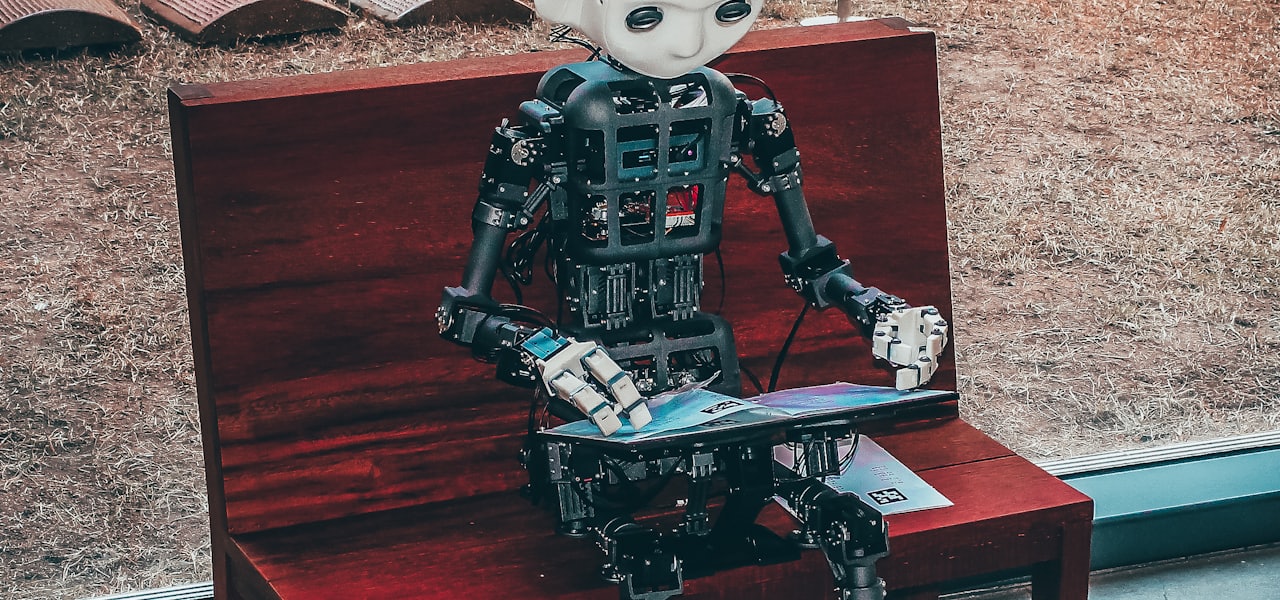
Figure AI, Inc. is an American robotics company developing humanoid robots that operate via artificial intelligence. The company was founded in 2022 by Brett Adcock. As of late 2025, the company has a $39 billion valuation. Three generations of humanoid robots (Figure 01–03) have been developed, as well as two iterations of a vision-language-action model (Helix 01–02), which can control up to two robots at once. By 2026, the robots demonstrated the potential ability to perform household work and the company gained publicity when a Figure 03 appeared at a White House event. == History == Figure AI was founded in 2022 by Brett Adcock, also known for founding Archer Aviation and Vettery. That year, the company introduced its prototype, Figure 01, a bipedal robot designed for manual labor, initially targeting the logistics and warehousing sectors. The initial model utilized external cabling for easier maintenance. In May 2023, Figure AI raised $70 million from investors including Adcock, who invested $20 million, and Parkway Venture Capital. In January 2024, Figure AI announced a partnership with BMW to deploy humanoid robots in automotive manufacturing facilities. In February 2024, Figure AI secured $675 million in venture capital funding from a consortium that includes Jeff Bezos, Microsoft, Nvidia, Intel, and the startup-funding divisions of Amazon and OpenAI; the company was then valued at $2.6 billion. Figure AI also announced a partnership with OpenAI, which would build specialized artificial intelligence (AI) models for Figure AI's humanoid robots, enabling its robots to process language; the collaboration ended after a year, with Adcock stating that large language models had become a smaller problem compared to those allowing for "high rate robot control". In August 2024, the company introduced Figure 02, describing it as the next step toward deploying humanoids for industrial use. The machine has 35 degrees of freedom (DOF), while the five-fingered hands have 16 DOF and the ability to carry up to 25 kilograms (55 lb). The model is equipped with cabling integrated into the limbs, a torso-placed battery, six RGB cameras, and an onboard vision-language-action (VLA) model. It has three times the computing power (including inference AI) of the previous model, including two graphics processing units, supported by Nvidia. Microphones, speakers, and custom AI models (developed with OpenAI) enable communication with humans. In early 2025, Figure AI announced BotQ, a manufacturing facility aiming to produce 12,000 humanoids per year with the help of its own humanoid robots, and Helix, a VLA model that can control up to two robots at once. Helix enables a robot to interact with the world without extensive manual training, according to the company allowing it to pick up nearly any small household object. By April, the company issued cease-and-desist letters to at least two secondary brokers promoting its private stock without authorization. In September, a third round of financing exceeded $1 billion, raising the company's total valuation to $39 billion. Investors included Brookfield Asset Management, Intel, Macquarie Capital, Nvidia, Parkway Venture Capital, Qualcomm, Salesforce, and T-Mobile. In October 2025, Figure 03 was introduced. According to the company, its hardware and software redesign aims to create a general-purpose robot able to learn directly from humans. An upgraded camera system delivers twice the frame rate, a quarter the latency, and a 60% wider field of view, in addition to a camera in each hand. Tactile sensors in the fingertips can detect forces as little as 3 grams (0.1 oz). It incorporates soft materials and a protected battery for safety, and removable, washable textiles. It supports wireless inductive charging. In November 2025, the former head of product safety sued the company on the basis of being fired for raising the concern that the company's robots were strong enough to fracture a human skull. By early 2026, Figure 02 had been used in demonstrations showing that it could load a washing machine, sort packages, and fold laundry. That January, Helix 02 was released, expanding the AI model to the entire body to allow for functional autonomy. A Helix 02–powered Figure 02 was shown to be capable of loading and unloading a dishwasher, based on hours of motion-capture data and simulation-based machine learning. In March, U.S. First Lady Melania Trump appeared at the White House with a Figure 03, promoting the presumptive eventual ability of AI to teach children. In May 2026, Figure AI livestreamed a group of their robots processing packages nonstop for almost a week, inspiring a 10-hour competition between their robot and a human, in which the robot performed 98.5% as well as the human.
Conduit (company)
Conduit Ltd. is an international software company. From its founding in 2005 to 2013, its most well-known product was the Conduit toolbar, which was widely-described as malware. In 2013, it spun off its toolbar business; today, its main product is a mobile development platform that allows users to create native and web mobile applications for smartphones. == Products == From 2005 to 2013, the company's most well-known product was the Conduit toolbar, which is flagged by most antivirus software as potentially unwanted and adware. Conduit's toolbar software is often downloaded by malware packages from other publishers. The company spun off the toolbar division that manages the Conduit toolbar in 2013. Today, the company's main product is a mobile development platform that allows users to create native and web mobile applications for smartphones. App creation for its App Gallery is free, but it charges a monthly subscription fee to place apps on the App Store or Google Play. == History == Conduit was founded in 2005 by Shilo, Dror Erez, and Gaby Bilcyzk. Between years 2005 and 2013, it ran a successful but controversial toolbar platform business. Conduit was part of the so-called Download Valley companies monetizing free software and downloads by bundling adware. The toolbars were criticized by some as being very difficult to uninstall. The toolbar software was referred to as a "potentially unwanted program" by some in the computer industry because it could be used to change browser settings. The company had more than 400 employees in 2013. In September same year, Conduit spun off its entire website toolbar business division, which combined with Perion Network. After the deal, Conduit shareholders owned 81% of Perion's existing shares and both Perion and Conduit remained independent companies. The substantial size of the Conduit user base allowed Perion to immediately surpass AOL in U.S. searches. In 2015, Conduit announced it would purchase Keeprz, a mobile customer loyalty platform, for $45 million.
Plum Voice
The Plum Group, Inc. (DBA Plum Voice) is a company. Plum is headquartered in New York City with offices in Boston and Denver. == History == Plum Voice, founded in 2000 as The Plum Group, Inc., was incorporated to create technologies for personalized audio communication. By 2001, Plum had commercialized the open-standard Plum VoiceXML IVR platform which facilitated the creation of dynamic telecom applications. 2001 - Commercial launch of Plum VoiceXML IVR platform for customer-premises deployment 2002 - Launch of Plum Voice Hosting Centers for 24x7x365 managed IVR hosting 2004 - Plum Voice application suite receives a "Product of the Year" award from Customer Interactions magazine 2008 - Plum Survey builder launched, a do-it-yourself IVR survey tool. 2010 - Plum launched QuickFuse, a web-based rapid development platform used to create voice applications. 2013 - Plum launched VoiceTrends, an analytics and reporting toolkit designed specifically for voice applications. Plum achieves PCI-DSS Level 1. 2015 - Plum launched Plum Insight, a multi-channel (voice, web, mobile) survey platform. Plum achieves HIPAA compliance. 2016 - Plum launched a new version of QuickFuse called Fuse+. 2020 - Plum sunsets QuickFuse, rebrands Fuse+ as Plum Fuse.
VideoPoet
VideoPoet is a large language model developed by Google Research in 2023 for video making. It can be asked to animate still images. The model accepts text, images, and videos as inputs, with a program to add feature for any input to any format generated content. VideoPoet was publicly announced on December 19, 2023. It uses an autoregressive language model.
Agent-assisted automation
Agent-assisted automation is a type of call center technology that automates elements of what the call center agent 1) does with his/her desktop tools and/or 2) says to customers during the call using pre-recorded audio. It is a relatively new category of call center technology that shows promise in improving call center productivity and compliance. == Types of agent-assisted automation == === Pre-recorded audio === Pre-recorded audio (sometimes referred to as soundboard (computer program) or as soundboard technology) is another form of agent-assisted automation. The purpose of using pre-recorded messages is to increase the probability (and in some cases error-proof the process so) that the right information is provided to customers at the right time. The required disclosures are pre-recorded to ensure accuracy and understandability. By integrating the recordings with the customer relationship management software, the right combination of disclosures can be played based on the combination of goods and services the customer purchased. The integration with the customer relationship management software also ensures that the order cannot be submitted until the disclosures are played, essentially error-proofing (poka-yoke) the process of ensuring the customer gets all the required consumer protection information. Phone surveys are ideal applications of this technology. Whether surveying market preferences or political views, the pre-recorded audio with an agent listening allows the questions to be asked in the same way every time, uninfluenced by the agents' fatigue levels, accents, or their own views. === Fraud prevention === Fraud prevention is a specialized type of agent-assisted automation focused on reducing ID theft and credit card fraud. ID theft and credit card fraud are huge threats for call centers and their customers and few good solutions exist, but new agent-assisted automation solutions are producing promising results. The technology allows the agents to remain on the phone while the customers use their phone key pads to enter the information. The tones are masked and the information passes directly into the customer relationship management system or payment gateway in the case of credit card transactions. The automation essentially makes it impossible for call center agents and also call center personnel that might be monitoring the calls to steal the credit card number, social security number, or other personally identifiable information. === Outbound telemarketing === Another specialized application space of agent-assisted automation is in outbound telemarketing, which goes under numerous headings including outbound prospecting, cold calling, solicitation, fund-raising, etc. Turnover is high among agents engaged in this kind of work because the task is tedious and emotionally difficult. It is tedious because the agent spends the bulk of their day, not talking to qualified leads, but in getting wrong numbers and answering machines. == Benefits == Just as automation has benefited manufacturing by reducing the mental and physical effort required of workers while simultaneously improving throughput, quality, and safety, agent-assisted automation is improving call center results while reducing the tiring aspects of the job for agents. In some cases, the agent-assisted automation streamlines the process and allows calls to be handled more quickly. By eliminating cutting and pasting from one application to another, by auto-navigating applications, and by providing a single view of the customer, agent-assisted automation can reduce call handle time and increase agent productivity. Second, in theory, the more steps that can be automated and the more logic that can be built into the call flow (e.g., if the customer buys items 2 and 9, then disclosures a, c, and f are read by the pre-recorded audio), then companies may be able to reduce the amount of training that is required of the agents while at the same time ensuring more consistency and accuracy. However, no published studies have reported this result yet. But an even larger problem in call centers is between-agent variation in behavior and results. Agents differ in the amount of training and coaching they receive, they differ in the amount of experience they have, their jobs are repetitious and tiring, and the process and procedures the agents are supposed to follow constantly change. Moreover, there are significant individual differences between agents in their intelligence, personality, motivations, etc. which all affect performance. Despite the large amount of money call centers have spent over decades trying to reduce between-agent variation, the problem is still so prevalent that one large study of customer interactions with call centers found that a customer's experience was completely a function of the quality of the agent who happened to answer the phone. Therefore, the most significant benefit of agent-assisted automation may prove to be in how the automation error-proofs or poka-yoke the process and ensures that something that needs to be done or said happens every time. Properly implemented, the between-agent variation for whatever step of the process the automation is applied to may be able to be reduced to near zero. This is especially important in a collection agency whose processes and procedures are closely regulated by the Fair Debt Collection Practices Act.